
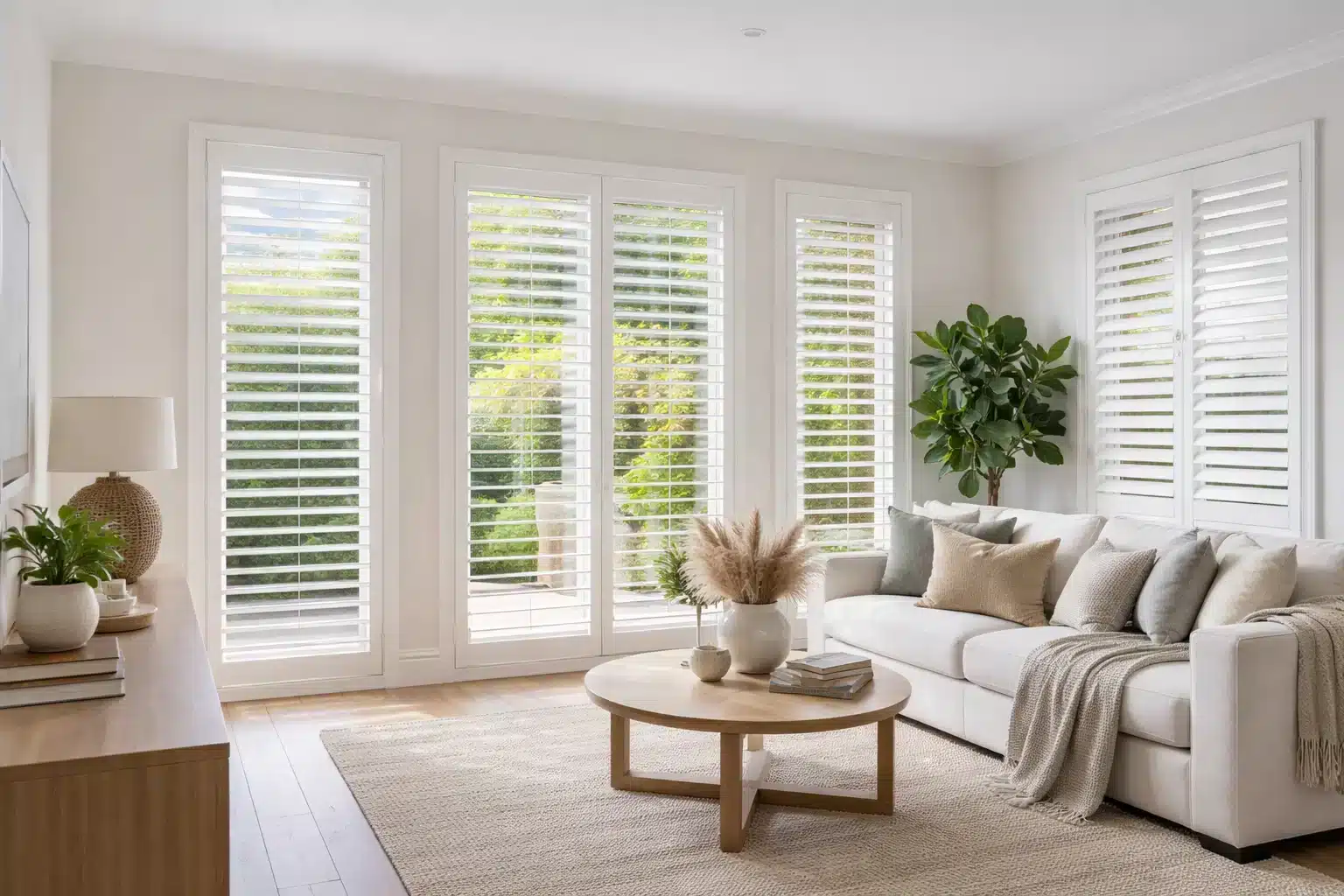
When your Georgia Power bill hits $350 in July and your AC runs constantly just to keep your Glenloch ranch house below 78°F, you know something has to change. Peachtree City homeowners face a unique energy challenge: those beautiful contemporary ranch and split-level homes that define our neighborhoods come with large west-facing windows that turn into solar ovens every summer afternoon.
The math is brutal. With temperatures regularly exceeding 95°F from June through September, your air conditioning system fights a losing battle against radiant heat pouring through unprotected glass. But here’s what Reddit threads about Georgia Power rate increases aren’t telling you: energy efficient shutters in Peachtree City can cut that heat gain by up to 77%, according to the U.S. Department of Energy’s window covering guidelines (Source: U.S. Department of Energy, Energy Saver Program, 2023).
Why Peachtree City’s Architecture Creates a Unique Cooling Problem
The West-Facing Window Trap in Local Homes
Drive down any street in Braelinn Village or along the famous Peachtree City golf cart paths, and you’ll notice a pattern: split-level homes built in the 1970s through 1990s feature expansive picture windows designed to showcase Lake Peachtree views and wooded lots. What looked great on the builder’s plans creates a thermal nightmare in Georgia’s humid subtropical climate.
Your home absorbs roughly 76% of solar heat through windows during peak afternoon hours (Source: ENERGY STAR Residential Windows Guide, 2024). In Peachtree City specifically, that west-facing orientation means your living room receives maximum solar exposure from 2 PM to 7 PM—exactly when Georgia Power charges peak demand rates.
How Unprotected Glass Costs You Money Every Month
The National Fenestration Rating Council reports that single-pane windows lose 10-25 times more energy than insulated walls (Source: NFRC Technical Document 100, 2022). Even if you upgraded to double-pane glass, you’re still losing significant cooling dollars without proper window coverings. Here’s what that looks like for a typical 2,400 square foot ranch in Glenloch:
| Window Treatment | Solar Heat Gain Blocked | Estimated Monthly AC Savings |
|---|---|---|
| No window covering | 0% | $0 (baseline) |
| Standard blinds | 25-35% | $18-28 |
| Cellular shades | 40-50% | $32-45 |
| Insulating shutters | 65-77% | $55-85 |
How Energy Efficient Shutters Actually Work in Georgia Heat
The Air Gap Principle That Slashes Your Bills
Thermal window coverings in Georgia need to do more than just block light—they must create a dead-air barrier that stops convective heat transfer. Insulating window shutters achieve this through engineered air gaps between the shutter panel and your glass. This trapped air acts as insulation, similar to how double-pane windows work but at a fraction of the replacement cost.
The American Society of Heating, Refrigerating and Air-Conditioning Engineers found that properly fitted interior shutters reduce window heat transfer by 45-50% compared to bare glass (Source: ASHRAE Handbook—Fundamentals, 2021). For your Peachtree City home, this translates directly to reduced runtime on your HVAC system.
Material Choices That Make Sense for Humid Georgia Summers
Not all shutters perform equally in our climate. Here’s what you should look for:
- Composite materials resist warping in Georgia’s 70-90% summer humidity levels
- Tight-fitting frames with weatherstripping maximize the insulating air pocket
- Adjustable louvers let you control light while maintaining thermal protection
- UV-resistant finishes prevent degradation from our intense southern sun exposure
Vinyl and hollow-core options may cost less upfront, but they lack the thermal mass needed to significantly impact your Georgia Power bills. Solid composite or hardwood shutters with foam cores deliver the R-value you need.
Real Savings Potential for Peachtree City Homeowners
Calculating Your Return on Investment
Georgia Power’s residential rates increased 12% between 2022 and 2024 (Source: Georgia Public Service Commission Rate Case Docket 44280, 2024). With average Peachtree City households spending $2,847 annually on electricity—roughly 35% higher than the national average due to cooling loads (Source: U.S. Energy Information Administration, State Energy Data System, 2023)—the savings from lower utility bills with shutters compound quickly.
Consider this breakdown for a home with 12 standard windows:
- Average installation cost: $3,600-$5,400 for quality insulating shutters
- Average annual energy savings: $660-$1,020 based on DOE estimates
- Simple payback period: 4-6 years
- Expected product lifespan: 20-30 years
- Lifetime savings potential: $13,200-$30,600
Why Peachtree City Homeowners Trust Energy-Saving Upgrades
With over 100 miles of golf cart paths connecting our community—and residents who actually use them daily—Peachtree City values practical, long-term investments over quick fixes. That’s why our neighbors consistently rank energy efficiency upgrades among their top home improvement priorities, according to local contractor surveys.
Strategic Placement for Maximum Impact
You don’t necessarily need to outfit every window to see meaningful savings. Focus your investment where it matters most:
- West-facing windows: Priority one—these receive brutal afternoon sun
- South-facing windows: High solar gain year-round, especially valuable in split-levels
- Large picture windows: Common in Braelinn Village ranches, these represent major heat entry points
- Rooms with thermostat access: Protecting these areas directly reduces HVAC cycling
A professional energy assessment can pinpoint exactly which windows in your home contribute most to your cooling load. Request your free energy savings consultation to get a customized analysis of your potential Georgia Power bill reductions.
Choosing the Right Insulating Shutters for Your Home Style
Options for Contemporary Ranch Homes
The single-story layouts prevalent throughout Peachtree City offer excellent opportunities for shutter installations. Your ranch home likely features:
- Consistent window heights that allow uniform shutter sizing
- Easy interior access for installation without specialized equipment
- Open floor plans where west-facing windows affect multiple living zones
Plantation-style shutters with 3.5″ or 4.5″ louvers complement the mid-century aesthetic of most Glenloch ranches while delivering optimal airflow control and thermal performance.
Solutions for Split-Level Challenges
Split-level homes near Lake Peachtree present unique considerations. Those dramatic stairwell windows and elevated living rooms often feature non-standard sizes. Custom-fitted insulating shutters ensure no gaps compromise your thermal envelope—critical when you’re paying Georgia Power rates for every BTU your AC generates.
For two-story window walls, consider motorized options that let you adjust coverage throughout the day without climbing ladders. Your energy savings increase when you actively manage solar gain as the sun moves.
Take Control of Your Georgia Power Bills This Summer
Every July, Peachtree City homeowners watch their electricity bills climb while their AC systems struggle against relentless Georgia heat. You’ve seen the rate increase notices from Georgia Power. You’ve felt how hot your living room gets when afternoon sun blasts through those west-facing windows.
Energy efficient shutters offer Peachtree City residents a proven path to lower utility bills—not through gimmicks or marginal improvements, but through fundamental physics that blocks heat before it enters your home. Whether you’re in a 1980s ranch in Glenloch or a newer build in Braelinn Village, the same principles apply: stop the heat at the glass, and your HVAC system works less.
Ready to see exactly how much you could save? Schedule a visit with our team for a free energy savings consultation. We’ll assess your specific windows, calculate your projected Georgia Power bill reductions, and show you shutter options that match both your home’s architecture and your budget. Don’t spend another summer watching money pour out of your windows—take action now before peak cooling season hits.
Frequently Asked Questions
How long does professional shutter installation take in a typical Peachtree City home?
Most installations for a standard 10-15 window home complete in one day. Custom-fitted shutters for split-level homes with non-standard window sizes may require a second visit for final adjustments. Your home remains fully functional throughout the process with no overnight disruption.
Do insulating shutters qualify for Georgia Power rebates or tax credits?
While Georgia Power does not currently offer specific rebates for window treatments, energy-efficient home improvements may qualify for federal tax credits under the Inflation Reduction Act when bundled with other upgrades. Consult a tax professional to determine eligibility for your specific situation.
Can I install energy efficient shutters myself to save money?
DIY installation is possible for standard rectangular windows, but improper fitting significantly reduces thermal performance. Gaps as small as 1/8 inch can decrease insulating value by 15-20%. Professional measurement and installation ensures the tight seal necessary to maximize your Georgia Power bill savings.
Will shutters make my rooms too dark during the day?
Adjustable louver shutters let you control exactly how much light enters while maintaining thermal protection. Tilting louvers upward reflects heat while still illuminating your space with indirect natural light—you won’t need artificial lighting during daylight hours in most Peachtree City homes.